Unraveling the Cosmic Giants: How Spacetime Ripples Reveal Black Hole Formation Secrets
Gravitational waves reveal that merging black holes and neutron stars have unusual oval orbits, challenging physics and offering clues to the formation of the universe's biggest black holes.
The Enigma of Supermassive Black Holes
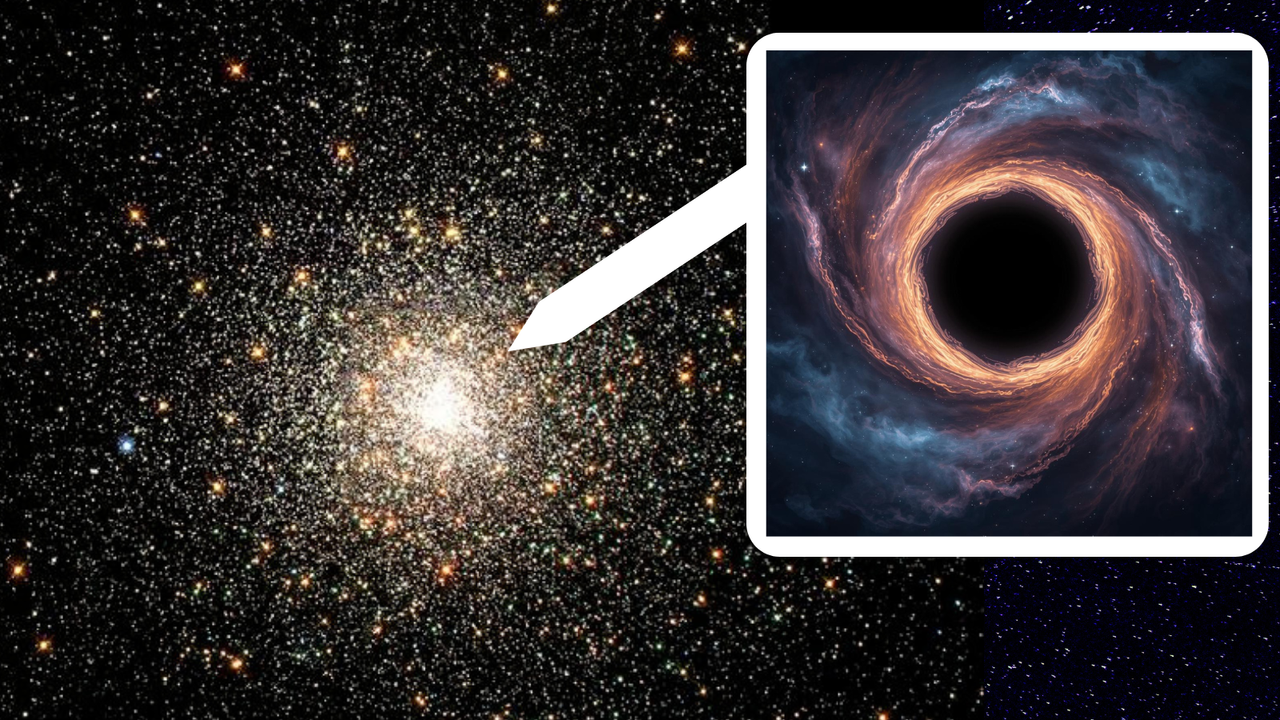
At the heart of nearly every galaxy lies a supermassive black hole, with masses ranging from millions to billions of times that of our Sun. Their origin is one of astronomy's most pressing mysteries. While stellar-mass black holes form from collapsing stars, the formation of these colossal behemoths requires far more dramatic processes. Recent observations of gravitational waves—ripples in spacetime—suggest that merging black holes and neutron stars often follow unusual oval orbits before collision, challenging conventional physics and offering vital clues to how the biggest black holes assemble.
Gravitational Waves: Spacetime's Whisper
Predicted by Einstein's general relativity, gravitational waves are distortions in spacetime produced by accelerating massive objects. Since 2015, the Laser Interferometer Gravitational-Wave Observatory (LIGO) and Virgo detector have cataloged dozens of such events, mostly from black hole mergers. These detections reveal not just the masses of the merging objects, but also the shape of their orbits. Intriguingly, some events show significant orbital eccentricity—meaning the orbits are ovals rather than near-perfect circles.
Eccentric Orbits: A Cosmic Puzzle
In classical Newtonian gravity, two orbiting bodies trace closed ellipses. But when strong gravitational fields and relativistic effects dominate, these orbits can precess or become eccentric. For merging black holes and neutron stars, expectations from typical formation pathways (like binary evolution in isolated environments) predict nearly circular orbits by the time they are close enough to emit detectable gravitational waves. Yet LIGO and Virgo have found hints of measurable eccentricity in some signals, suggesting the systems formed via dynamical interactions in dense stellar clusters or accretion disks. Such odd orbits challenge the standard model and imply that these binary systems may have been kicked or captured into their current paths, not evolved quietly together over eons.
How Eccentricity Offers Clues to Black Hole Growth
If the biggest black holes grow by merging with other black holes, the orbital shape of their precursors encodes their formation history. An eccentric merger likely occurred after a close encounter in a crowded environment—like a galactic nucleus where black holes can also accrete gas and become supermassive. This aligns with theories that supermassive black holes form via repeated mergers in dense clusters rather than solely from direct collapse. By analyzing the eccentricity distribution from gravitational wave events, scientists can distinguish between isolated binary evolution and dynamical assembly—a key step in understanding the cosmic evolution of black holes.
Challenging the Laws of Physics
The presence of eccentric orbits in merging systems does more than reveal their origin—it also tests gravity itself. General relativity predicts that gravitational waves carry away energy and angular momentum, circularizing orbits over time. If eccentricity persists until merger, it suggests that the binary formed recently (in astrophysical terms) or that an external perturber (like a third black hole) is influencing the system. This opens the door to modified gravity theories, where the rate of orbital decay or the shape of the waves deviates from Einstein's predictions. So far, no clear violation has been found, but the growing catalog of events with eccentric signatures provides a rigorous testbed.
Observing the Invisible: Future Prospects
As gravitational wave detectors improve, they will catch more eccentric mergers. The planned Einstein Telescope and LISA (Laser Interferometer Space Antenna) will be sensitive to lower frequencies, allowing them to detect massive black hole mergers before they become circular. With these data, astronomers can trace the formation of the largest black holes back to their seeds. Already, events like GW190521—a merger producing a black hole of 85 solar masses—hint that intermediate-mass black holes may populate dense clusters, growing via repeated mergers. Eccentric orbits are a direct signature of that process.
Conclusion: From Spacetime Ripples to Cosmic Origins
The strange, oval orbits of merging black holes and neutron stars are not mere curiosities—they are footprints of the universe's most epic assembly lines. By decoding the clues embedded in gravitational waves, scientists are slowly unraveling how the biggest black holes in the universe form: through violent, dynamic encounters that challenge our understanding of physics. Each new detection adds a piece to the puzzle, moving us closer to answering one of cosmology's fundamental questions.