Revolutionary Fossil Find Rewrites Early Life Narrative
540-million-year-old micro-fossils from Brazil, once thought to be worm trails, are actually fossilized bacteria and algae, challenging early animal origins.
The world of early life just got a dramatic plot twist. A team of scientists reexamining 540-million-year-old microfossils from Brazil has overturned a long-standing assumption about animal origins. What were once confidently identified as the trails of ancient worm-like creatures are now revealed to be fossilized communities of bacteria and algae, some still containing intact cells and organic material. This stunning reinterpretation challenges our understanding of the earliest animal evolution and opens new questions about how we interpret signs of life in the rock record. Below, we break down the discovery in a Q&A format, exploring the evidence, the implications, and what it means for the hunt for Earth's first animals.
What did scientists originally think these 540-million-year-old microfossils were?
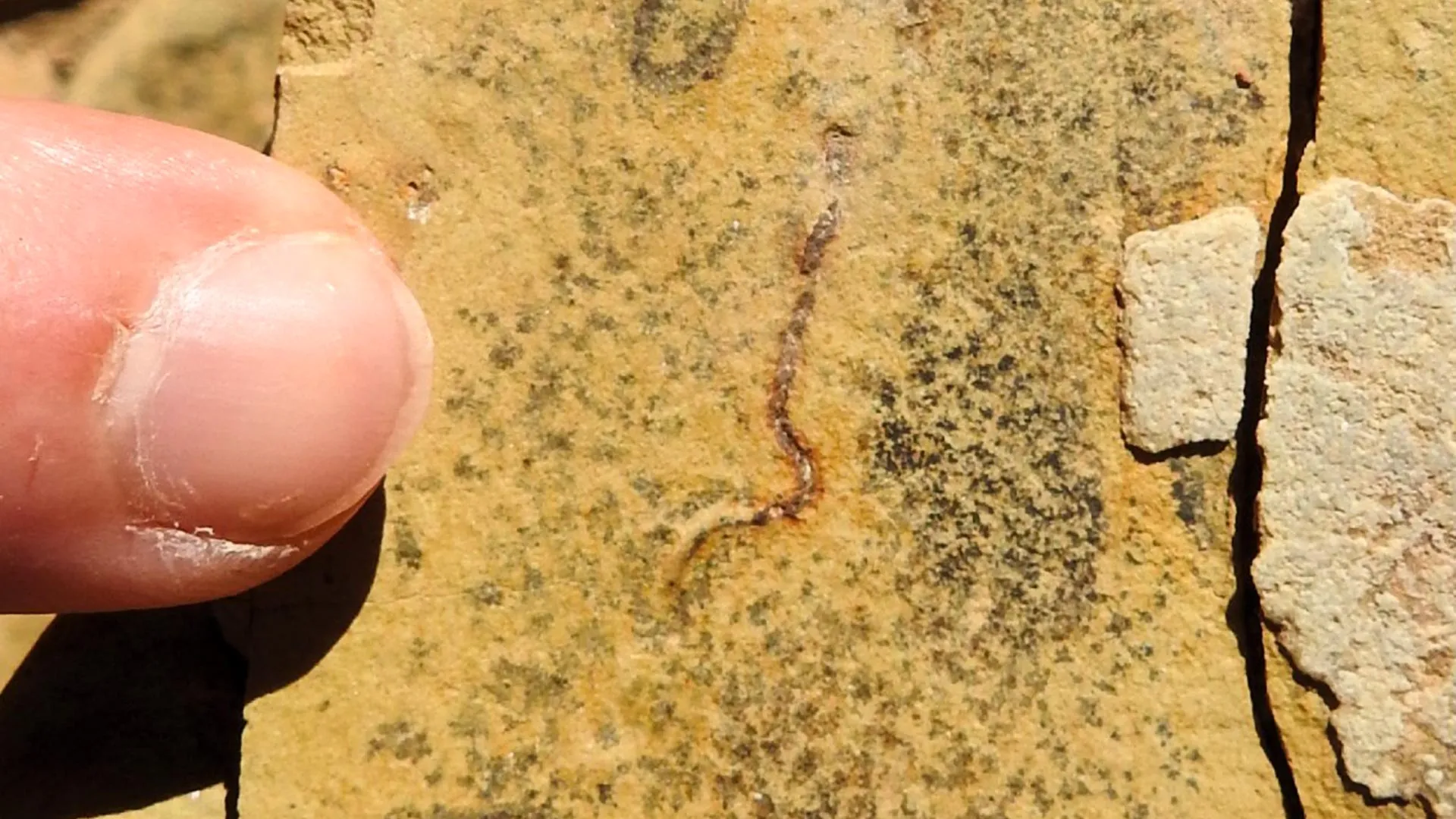
For decades, researchers believed that these small, sinuous structures found in Brazilian rocks were trace fossils—specifically, trails or burrows left behind by tiny, worm-like animals. This interpretation was exciting because it suggested the presence of bilaterian animals (organisms with bilateral symmetry, like worms) during the Ediacaran period, around 540 million years ago. Such early animal activity would have pushed back the timeline for complex animal behavior and locomotion. The fossils appeared to show distinct, meandering patterns that resembled modern worm trails, and they were widely cited as evidence for early animal life. However, the lack of any clear body fossils in the same rocks raised suspicions. The new study used advanced imaging techniques to look closer at the structures and found no signs of sediment displacement or burrowing features—hallmarks of true animal trails. Instead, the patterns matched those formed by microbial communities growing in layered mats.
What is the new interpretation of these microfossils?
The fossils are now understood to be the remains of ancient microbial mats—complex communities of bacteria and algae that grew on the seafloor during the Ediacaran period. Instead of being trails left by moving animals, the structures are the actual bodies of these microorganisms, some of which have been preserved in astonishing detail. Scientists identified distinct cellular layers, filaments, and even organic matter still present within the fossils. The meandering shapes that looked like worm trails are actually the result of microbial growth patterns: as the microbes expanded and colonized the sediment, they created sinuous, branching forms. This reinterpretation aligns with other evidence from the same geological formation, which shows a lack of animal trace fossils elsewhere. The finding suggests that the rock record may contain many more such microbial pseudofossils, cautioning against overinterpreting such structures as evidence of early animals.
What evidence supports the new interpretation?
The key evidence comes from a detailed microscopic and chemical analysis of the microfossils. Using scanning electron microscopy and energy-dispersive X-ray spectroscopy, researchers discovered that the structures consist of multiple layers of carbon-rich material that once formed living films. They found no features characteristic of animal locomotion, such as cross-cutting of sediment layers or compression of grains. Instead, the fossils show fine, wavy laminae typical of microbial mats, along with spherical bodies interpreted as algal cysts and filamentous sheaths of bacteria. The presence of intact organic compounds further confirms a biological origin in situ, rather than as trace fossils. Additionally, the fossils are consistently associated with sedimentary structures known to form in microbe-rich environments. This combination of morphological and chemical data makes a strong case against the original animal-trail hypothesis.
Why is this discovery significant for understanding early animal life?
This revision removes what was considered one of the most compelling pieces of evidence for the existence of early, complex animals before the Cambrian explosion. Without these supposed worm trails, the case for pre-Cambrian bilaterians becomes weaker, and scientists must rely on other, rarer fossil remains. It also highlights how easily pseudofossils can be misinterpreted, especially in rocks from times when life was simple. The discovery underscores the importance of revisiting old samples with new technology. For the broader narrative of animal evolution, it means that the earliest confirmed animals still appear to emerge around 541 million years ago during the Cambrian, rather than earlier. This resets the timeline for when complex life first moved, burrowed, and interacted with sediment.
How were the fossils preserved so well?
The exceptional preservation is due to a perfect storm of rapid burial and mineralization in an oxygen-poor environment. The microbes grew on the seafloor in thin layers. When they died, they were quickly covered by fine-grained sediment rich in silica and clay minerals. This prevented decay and allowed the organic matter to be replaced or coated by minerals, especially pyrite and quartz. Over millions of years, these processes preserved not just the shapes but also the original carbon compounds. The Brazilian site, known as the Bambuí Group, has unusually low metamorphism, meaning the rocks were not heated and compressed enough to destroy the delicate cellular structures. The result is a rare window into the microscopic world of Ediacaran microbial life, with cells and organic films intact, as if the bacteria and algae had been freeze-dried in stone.
What does this mean for the search for early animal fossils?
This discovery serves as a cautionary tale for paleontologists hunting for the earliest evidence of animal life. It shows that trace-fossil interpretations must be backed by multiple lines of proof, including detailed sedimentology and geochemistry. Future searches should prioritize deposits where soft-tissue preservation is likely and where microbial mat structures are not present. The study also suggests we may need to re-evaluate other putative animal fossils from the Ediacaran period using similar techniques. On the flip side, it opens up a new avenue: studying preserved microbial communities can reveal conditions on the early Earth. The search for animals continues, but now with a clearer understanding of what is not an animal. As lead researcher Dr. Maria Santos noted, “We must be careful not to see animals in every squiggle.”