Hydrogen Trucks After HVS: Niche Markets, Hefty Subsidies, and Endless Pilots
Explores hydrogen trucking's future after HVS, focusing on niche applications, heavy subsidy reliance, and extended pilot phases, with lessons for the sector.
The collapse of Hydrogen Vehicle Systems (HVS) sent ripples through the zero-emission freight world. HVS wasn't a mere sketch—it boasted a serious engineering team, public and private funding, real prototypes, and a clear target: heavy-duty long-haul trucks. Yet, despite the ambition, the company's journey mirrors the broader hydrogen transportation narrative: limited application scope, deep dependence on subsidies, and prolonged pilot phases. This article examines what comes next for hydrogen in freight, using HVS as a cautionary tale and a lens onto the sector's future.
The Rise and Pause of Hydrogen Vehicle Systems (HVS)
HVS embodied the promise of fuel-cell trucks. It had strategic partnerships, government support, and a plausible market—zero-emission heavy freight, where battery-electric trucks struggle due to weight and range. But the roadblocks multiplied: high vehicle costs, sparse refueling infrastructure, and competition from fast-improving battery technology. When HVS paused operations, it wasn't a failure of engineering but a sign of systemic hurdles that even well-funded startups cannot easily overcome.
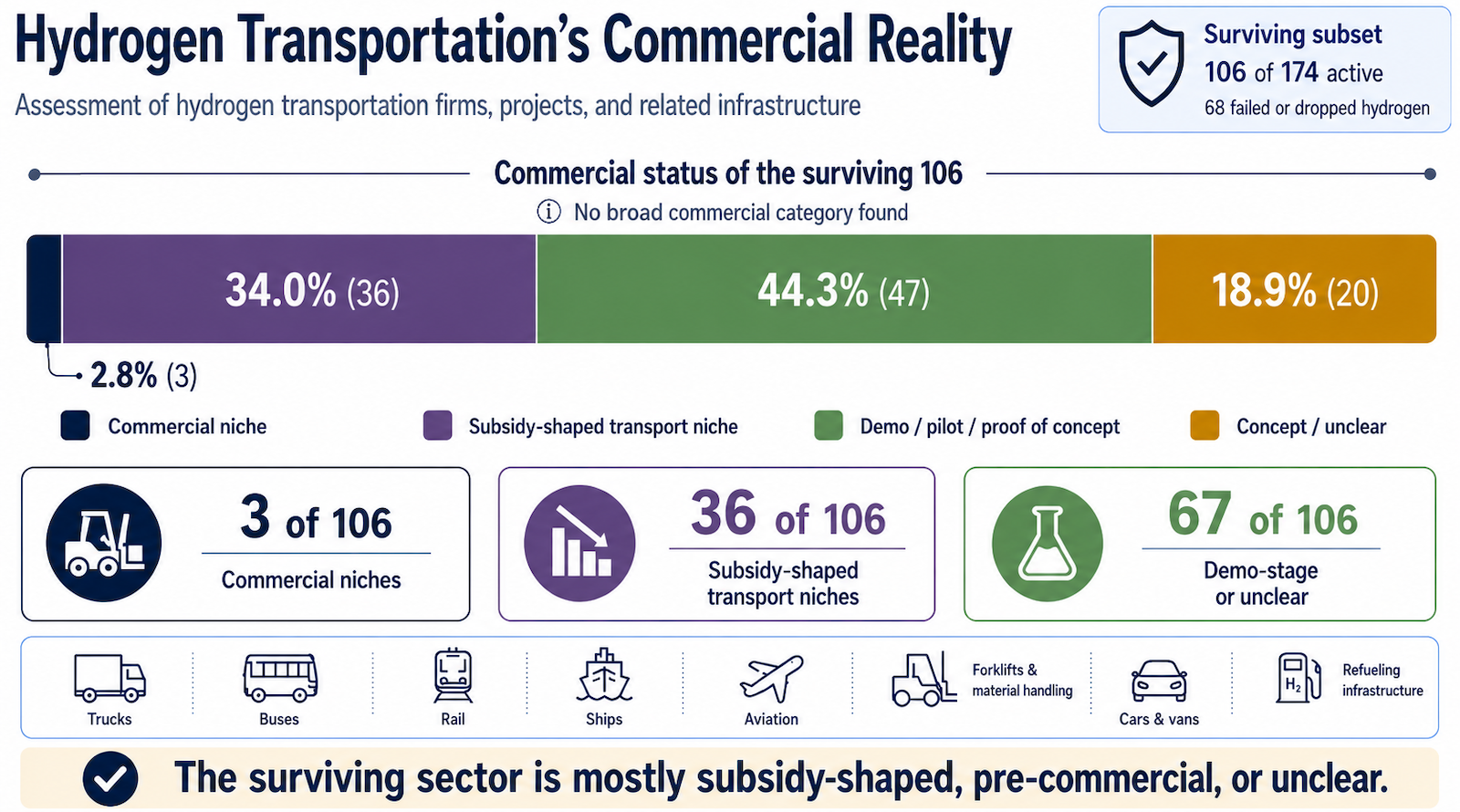
Narrow Niches: Where Hydrogen Makes Sense
Hydrogen's role in transportation is not about replacing batteries across the board. Instead, it fits into specific narrow niches where batteries fall short. These include:
Long-Haul Heavy-Duty Freight
For routes exceeding 500 miles or requiring quick refueling, hydrogen fuel cells offer a compelling alternative. Battery-electric trucks would need enormous, heavy battery packs, cutting into payload. Hydrogen's higher energy density by weight keeps the vehicle lighter—but at the cost of lower overall efficiency.
Remote and Off-Grid Operations
In regions without reliable grid power for charging, hydrogen can be produced locally (e.g., via electrolysis using renewable energy) and stored as a fuel. This makes it attractive for mining, construction, and port logistics. However, the infrastructure investment remains substantial.
Beyond these niches, hydrogen struggles to compete. Battery-electric trucks are already cheaper to operate per mile and are improving fast. The window for hydrogen is narrowing, not widening.
The Subsidy Dependency
Every hydrogen truck on the road today rides on a tide of public money. Governments in Europe, Asia, and North America have poured billions into hydrogen hubs, production tax credits, and vehicle purchase incentives. HVS itself benefited from UK government grants. The question is: can hydrogen ever stand without these subsidies?
Current cost estimates suggest that green hydrogen (produced from renewables) needs to drop from around $5–7/kg to below $2/kg to be competitive with diesel—and even then, battery-electric might still win on total cost of ownership. Without continued subsidies, the entire hydrogen trucking ecosystem risks collapse. This subsidy dependency makes investors wary and slows commercial adoption.
The Era of Long Pilots
For over a decade, hydrogen truck projects have been stuck in long pilot phases. Companies like Nikola, Hyzon, and HVS launched demonstration fleets, but few graduated to full commercial deployment. Pilots serve as proof-of-concept, but they also reveal persistent problems: fuel cell durability, hydrogen storage, and the chicken-and-egg challenge of refueling stations.
Meanwhile, battery-electric trucks are already in production from Tesla, Daimler, and Volvo, with thousands of units ordered. Hydrogen's pilots grow longer, while battery competitors scale up. The risk is that hydrogen never leaves the proving ground.
Lessons Learned and Future Outlook
HVS's story teaches us that ambition alone cannot overcome market realities. The future of hydrogen transportation likely involves:
- Hybrid approaches: Combining hydrogen fuel cells with smaller batteries for range extension.
- Targeted subsidies: Focusing public funds on the niches where hydrogen has a clear advantage, not subsidizing everywhere.
- Infrastructure investment: Building out hydrogen corridors along major freight routes, paired with renewable production.
- Technology maturation: Improving fuel cell efficiency and durability through sustained R&D.
But the clock is ticking. Battery technology advances yearly, and the longer hydrogen remains a future fuel, the harder it becomes to catch up. HVS may have been the canary in the coal mine—or the early warning that hydrogen trucks will remain a niche, subsidized, pilot-heavy segment for years to come.
For further reading on hydrogen's challenges, see our analysis of subsidy dependency and pilot programs.