Curiosity Mars Rover Successfully Dislodges Stubborn Rock Sample 'Atacama'
NASA's Curiosity rover drilled a rock sample on Mars, but the rock got stuck to its drill arm for several days before finally breaking free, providing unique insights.
Introduction
In a remarkable display of Martian geology and engineering resilience, NASA's Curiosity rover encountered an unexpected challenge while drilling a rock sample on the Red Planet. The rock, nicknamed "Atacama," managed to cling to the rover's drill arm for several days before finally being shaken loose, offering scientists a unique glimpse into the mechanical properties of Martian surface materials.
The Drilling Operation
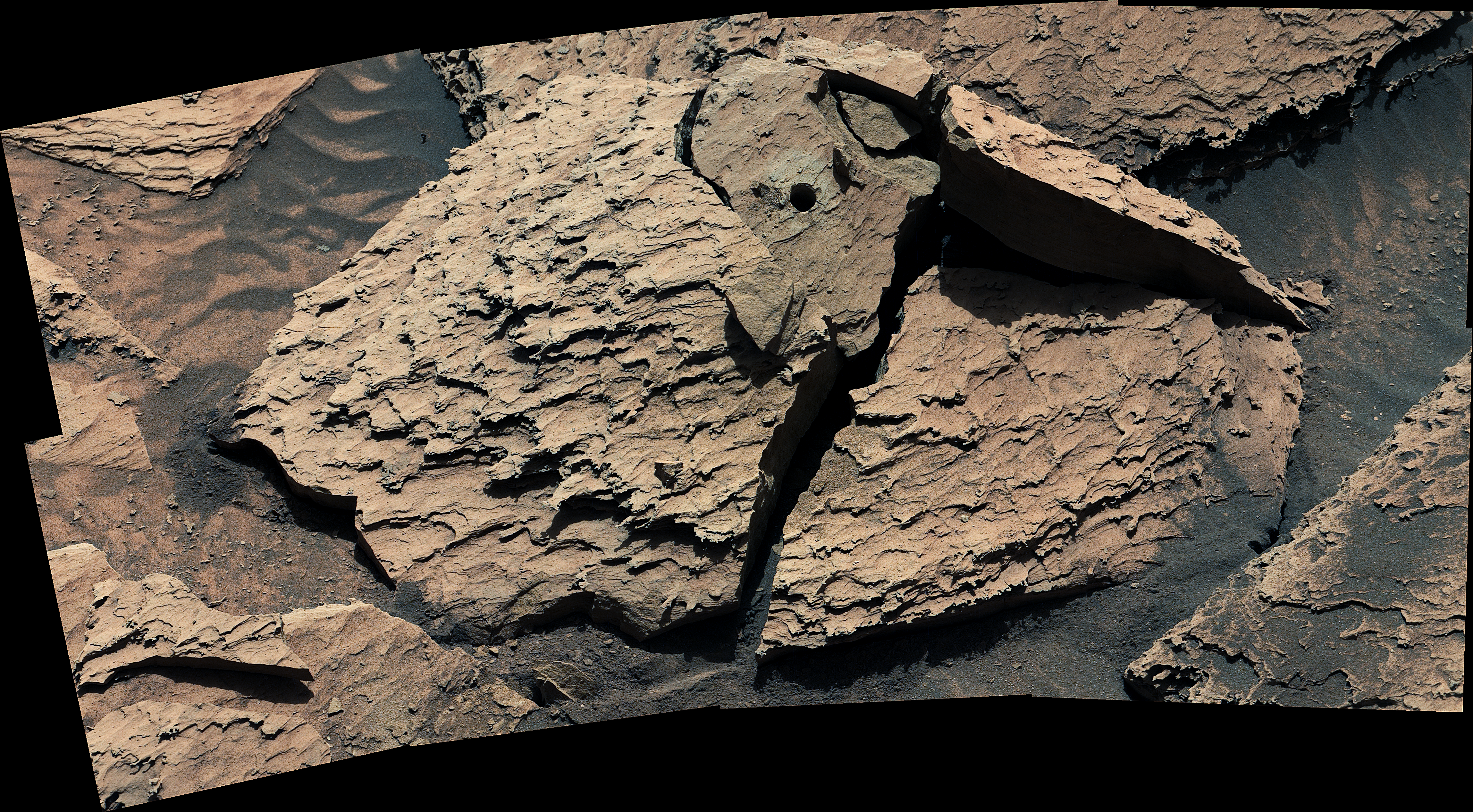
On April 25, 2026, Curiosity's drill successfully bore into a rock estimated to be 1.5 feet in diameter at its base and roughly 6 inches thick. The target, later named Atacama by the mission team, was chosen for its promising mineralogical content. After completing the drilling process, the rover's robotic arm retracted as usual—but this time, the rock came along for the ride.
The circular hole produced by the drill is clearly visible in subsequent images captured by Curiosity's Mast Camera (Mastcam) on May 6. Atacama would weigh approximately 28.6 pounds on Earth—and only about a third of that in Mars' weaker gravity.
A Sticky Situation on Mars
Engineers at NASA's Jet Propulsion Laboratory were surprised to see the rock firmly attached to the drill bit after the sample was collected. Over the next several days, the team executed a careful sequence of commands to free the unwanted hitchhiker. They repositioned the robotic arm and activated the drill's vibration mechanism in a bid to shake the rock loose. The process required extreme caution to avoid damaging the delicate instruments.
The situation highlighted the unpredictable nature of Martian surface materials. While previous samples had released cleanly, Atacama's adhesive properties—possibly due to a combination of mineral cement and electrostatic forces—caused it to become stuck.
Detachment and Analysis
After days of patient maneuvering, the rock finally detached on May 1, 2026. Engineers reported that it broke into several pieces upon release, confirming that the drill's vibrations had weakened its structure. The broken fragments were left on the Martian surface near the drilling site, now serving as a natural laboratory for studying rock fracture under low-gravity conditions.
The Mastcam image taken five days later provided a detailed look at the drill hole and the remaining base of Atacama, helping scientists assess the rock's grain structure and the drill's performance.
Significance for Mars Exploration
Though it posed a temporary obstacle, the Atacama incident offers valuable lessons for future sample-return missions and in-situ resource utilization. Understanding how Martian rocks respond to drilling and vibration is critical for designing more robust sample-collection systems.
Curiosity's ability to free itself without manual intervention demonstrates the sophisticated autonomy built into the rover's systems. The successful extraction of the drill sample itself—even if it came with an unplanned companion—means that the mission's science goals remain on track.
Mastcam Image Reveals Details
A close-up view from the Mastcam on May 6 shows the drill hole with remarkable clarity. The image reveals the rock's layered texture and the precise circular cavity left by the drill bit. Scientists have used this image to estimate the rock's density and to plan further observations of the surrounding area.
For higher-resolution versions of the image, visit the introductory section or the official NASA website.
Conclusion
Curiosity's encounter with the pesky Atacama rock is a testament to the challenges and triumphs of robotic exploration. What might seem like a minor mechanical hiccup on Earth becomes a complex choreography of commands and sensors on another planet. The rover continues its journey across Gale Crater, now with one less rock attached to its drill and another success story added to its legacy.